

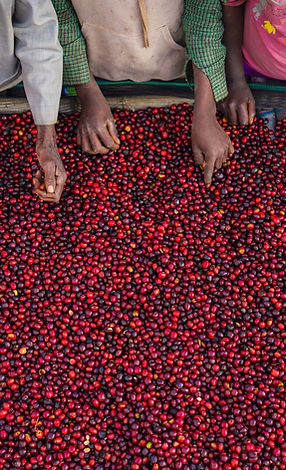
Ethiopia is widely celebrated as the birthplace of coffee—a land where arabica beans grow wild in ancient highland forests and where centuries of tradition meet modern export excellence. At Jireh Export and Import, we bring this heritage directly to international buyers, offering specialty and commercial grade coffee beans alongside premium tea leaves sourced from Ethiopia’s most distinguished growing regions.
Our coffee and tea products represent the very best of Ethiopian agriculture: carefully cultivated, expertly processed, and rigorously graded to meet the expectations of discerning buyers worldwide. Whether you’re a specialty roaster seeking distinctive single-origin lots or a commercial buyer requiring consistent volume, we have the products and expertise to serve your needs.
Ethiopian Coffee: A World of Flavor
Growing Regions and Flavor Profiles
Ethiopian coffee is defined by its diverse growing regions, each producing beans with unique and recognizable characteristics:
Yirgacheffe
Perhaps Ethiopia’s most famous coffee region, Yirgacheffe produces beans with extraordinary floral aromatics, jasmine and citrus notes, and a clean, tea-like body. These coffees are prized by specialty roasters worldwide and consistently score among the highest in cup quality evaluations.
Flavor notes: Jasmine, bergamot, lemon, stone fruit, floral
Processing: Primarily washed, some natural lots available
Grade potential: Specialty Grade 1 and 2
Sidama (formerly Sidamo)
The Sidama region produces coffees with balanced acidity and complex flavor notes ranging from citrus to berry and chocolate. These are consistently high-quality beans suitable for both specialty and premium commercial markets.
Flavor notes: Citrus, berries, chocolate, wine-like undertones
Processing: Washed and natural options
Grade potential: Specialty and commercial grades
Guji
A newer standout region that has quickly gained favor among third-wave roasters, Guji produces coffees with intense fruitiness, bold body, and exceptional complexity. The region’s high altitudes and ideal growing conditions yield beans with remarkable cup quality.
Flavor notes: Blueberry, tropical fruit, wine-like, complex
Processing: Washed and natural, some experimental processing
Grade potential: Specialty Grade 1 and 2
Limu
Offering a milder cup with wine-like acidity and chocolate undertones, Limu coffees are often described as smooth, well-rounded, and approachable. They work well as both single-origin offerings and blend components.
Flavor notes: Chocolate, wine, mild citrus, balanced
Processing: Primarily washed
Grade potential: Commercial and specialty grades
Harrar
Known for its wild, fruity characteristics—often described as blueberry or wine-like—Harrar is typically dry-processed, giving it a heavy body and distinctive profile that stands out in any blend or single-origin presentation.
Flavor notes: Blueberry, wine, earthy, complex
Processing: Traditional natural/dry process
Grade potential: Commercial and specialty grades
Coffee Grades and Specifications
Ethiopian coffee is graded according to strict standards that consider both physical appearance and cup quality:
Specialty Grades
| Grade | Defect Count | Cup Score | Typical Use |
|---|---|---|---|
| Grade 1 | 0-3 defects per 300g | 85+ | Premium specialty, single-origin |
| Grade 2 | 4-12 defects per 300g | 80-85 | Specialty roasts, blends |
Commercial Grades
| Grade | Defect Count | Typical Use |
|---|---|---|
| Grade 3 | 13-25 defects per 300g | Quality commercial blends |
| Grade 4 | 26-45 defects per 300g | Commercial roasting |
| Grade 5 | 46-100 defects per 300g | Mass market, industrial use |
Physical Specifications
- Moisture content: 11-12% (optimal for export and storage)
- Screen size: 14-18 (varies by region and grade)
- Bean shape: Uniform, well-formed
- Color: Bluish-green to green (fresh crop indicators)
Processing Methods
Washed (Wet-Processed)
Coffee cherries are depulped, fermented, and washed before drying. This method produces cleaner, brighter cups with more consistent flavor profiles. Common in Yirgacheffe and Sidama regions.
Natural (Dry-Processed)
Whole cherries are dried in the sun before milling. This traditional method produces heavier body, more fruit-forward flavors, and complex profiles. Traditional in Harrar and increasingly popular for specialty lots from other regions.
Honey Process
A hybrid method where some fruit mucilage remains during drying, creating unique flavor profiles between washed and natural. Available for select specialty lots.
Ethiopian Tea
Beyond coffee, Ethiopia produces quality tea leaves in several regions, offering buyers an additional product category with growing international demand.
Tea Types Available
- Black tea: Fully oxidized, robust flavor
- Green tea: Unoxidized, fresh and vegetal notes
- Specialty teas: Limited production lots
Growing Regions
- Gumaro
- Wushwush
- Chewaka
Quality Specifications
- Leaf grade: Whole leaf, broken, fannings, dust
- Moisture content: Maximum 7%
- Packaging: Standard tea chests, poly-lined cartons, or custom options
Packaging Options
We offer flexible packaging to meet diverse buyer requirements:
Coffee Packaging
- 60kg jute bags: Traditional export standard
- Grain-Pro bags: For specialty lots requiring extra protection
- Vacuum-packed samples: 1-5kg for quality evaluation
- Custom packaging: Available by arrangement
Tea Packaging
- 20-40kg plywood chests: Traditional tea export packaging
- Poly-lined cartons: For smaller quantities
- Sample packs: For pre-shipment evaluation
Harvest and Availability
Understanding Ethiopia’s coffee cycle helps buyers plan their purchasing:
| Season | Activity |
|---|---|
| October – December | Main harvest |
| December – March | Processing and preparation |
| January – June | Peak export availability |
| July – September | Limited availability, higher prices |
For fresh-crop coffee, orders placed between January and March offer the widest selection and best quality.
Why Source Coffee and Tea from Jireh Export
- Direct relationships with washing stations, cooperatives, and producers
- Consistent grading aligned with international standards
- Pre-shipment samples for quality verification
- Full documentation including quality analysis reports
- Flexible volumes from sample lots to full container loads
- Expert knowledge of Ethiopian coffee regions and seasons
Contact Us for Coffee and Tea Inquiries
Whether you need a 60kg sample or regular container shipments, we’re ready to discuss your requirements and help you access Ethiopia’s finest coffee and tea.
📧 info@jirehexport.com
📞 +251-XXX-XXXXXX